

Simple Homeschool Room – Organization + Inspiration!
This post about Homeschool Room Inspiration may contain affiliate links, which means I may receive a small commission (at no extra cost to you) if you purchase through my link.
“Children learn as they play. Most importantly, in play, children learn how to learn.” – O. Fred Donaldson
Hello, friend! I hope you are having a wonderful day thus far 🙂 Today, we are going to be talking about a homeschool room or space. Setting up a homeschool room can feel a bit overwhelming, especially if you’re just starting your homeschool journey.
The good news? It doesn’t have to look like a Pinterest-perfect classroom to be effective. With a little intention, your homeschool space can be cozy, functional, and tailored to your family’s unique learning style and needs.
Whether you’re working with a full room, a corner of the dining area, or a rolling cart in a tiny apartment, this post will help you create a homeschool space that encourages focus, freedom, and fun. Here are some things to keep in mind before we get to the main content. Designing a homeschool space doesn’t always mean you need an entire room; in fact, many homeschool moms create beautiful homeschool rooms right at the dining room table or in a corner of the living room. If you’re working with a small space, there are plenty of creative ideas to turn even a dining table into a functional space for school time.

Whether you have a dedicated homeschool room or just a small room to work with, the key is finding the right place for your homeschool materials and school books. A bulletin board can help keep things organized, while a morning basket or storage bin can keep supplies ready for morning time on a regular basis. The best ways to make a space work often come down to little things—using extra space under the table for storage, keeping homeschool supplies in labeled bins, and being intentional about how you set up your learning space. Every family has different needs, and there are so many different ways to make a simple homeschool room that works for you.
You don’t need much time or the perfect setup; sometimes the only thing that matters is that it’s a quiet space where homeschool work can happen consistently. Even in a small space, you can create an organized homeschool space that’s both practical and peaceful—a great outcome for any homeschool mom looking to make the most of what she has. With all of that said, here are some helpful tips for you to consider as you design the perfect homeschool setup for you and your family. I’ve also sprinkled in several of my favorite homeschool room ideas that I’ve found through my research.
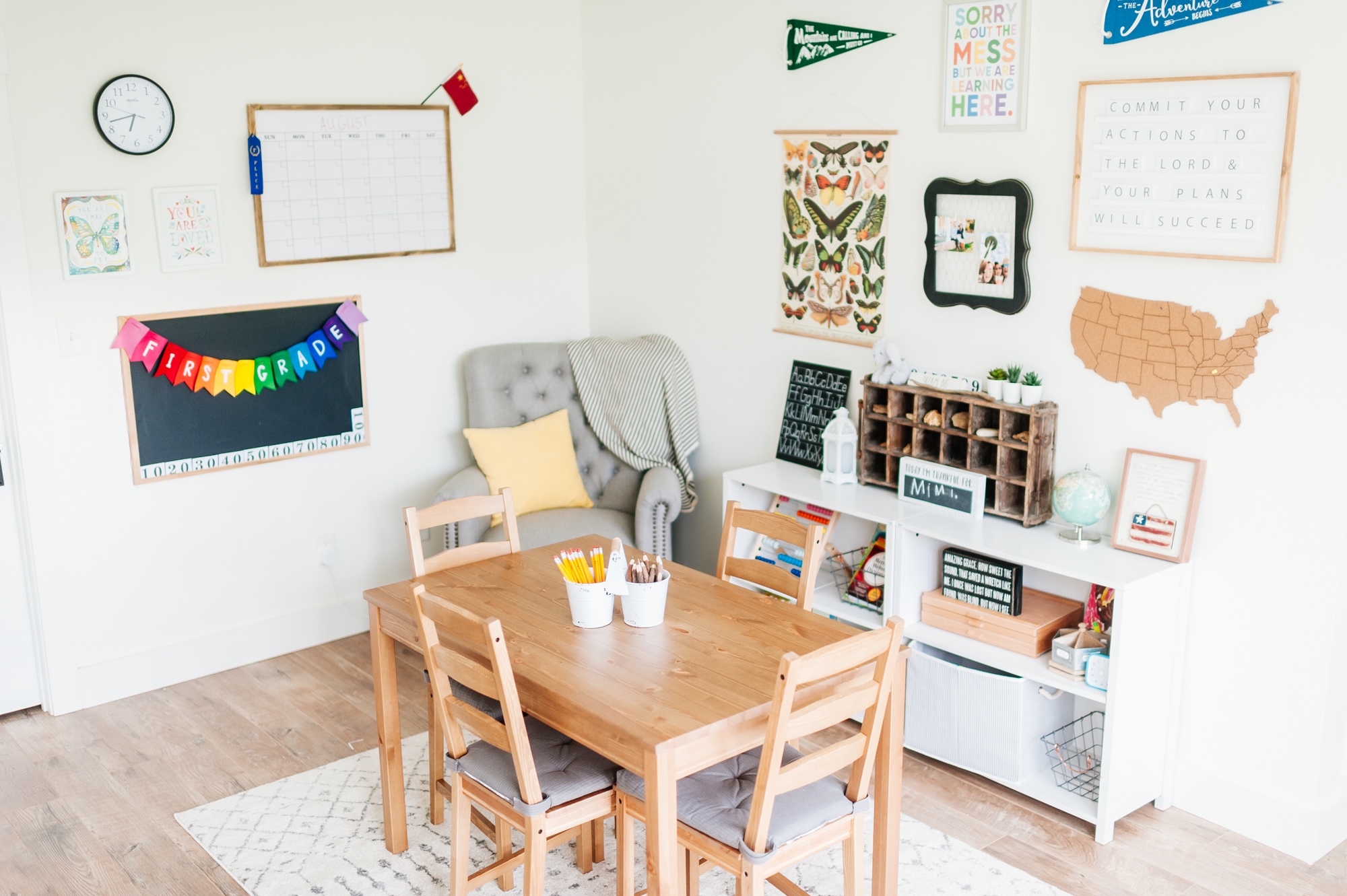

Step 1: Choose the Right Location
The first step is to decide where your homeschool learning will take place. Though I do not think there is any specific magic in the place you choose, I do think it’s important to have the same dedicated space that you do things each day. By choosing a consistent spot, you help bring predictability and stability to your school day which is super helpful for kids. As you choose a spot, consider:
- Natural light: A bright space feels more cheerful and keeps energy levels up.
- Noise levels: If possible, pick a quieter part of your home to minimize distractions. I know in some seasons of life, there really isn’t a “quiet” place, but maybe focus more on the simplicity of the spot (think fewer toys, screens, etc.).
- Accessibility: Make sure younger children can easily reach what they need and that things that are more fragile are up out of reach.
Note: You don’t need a dedicated “school room.” Even a kitchen table with a storage shelf nearby can work beautifully!

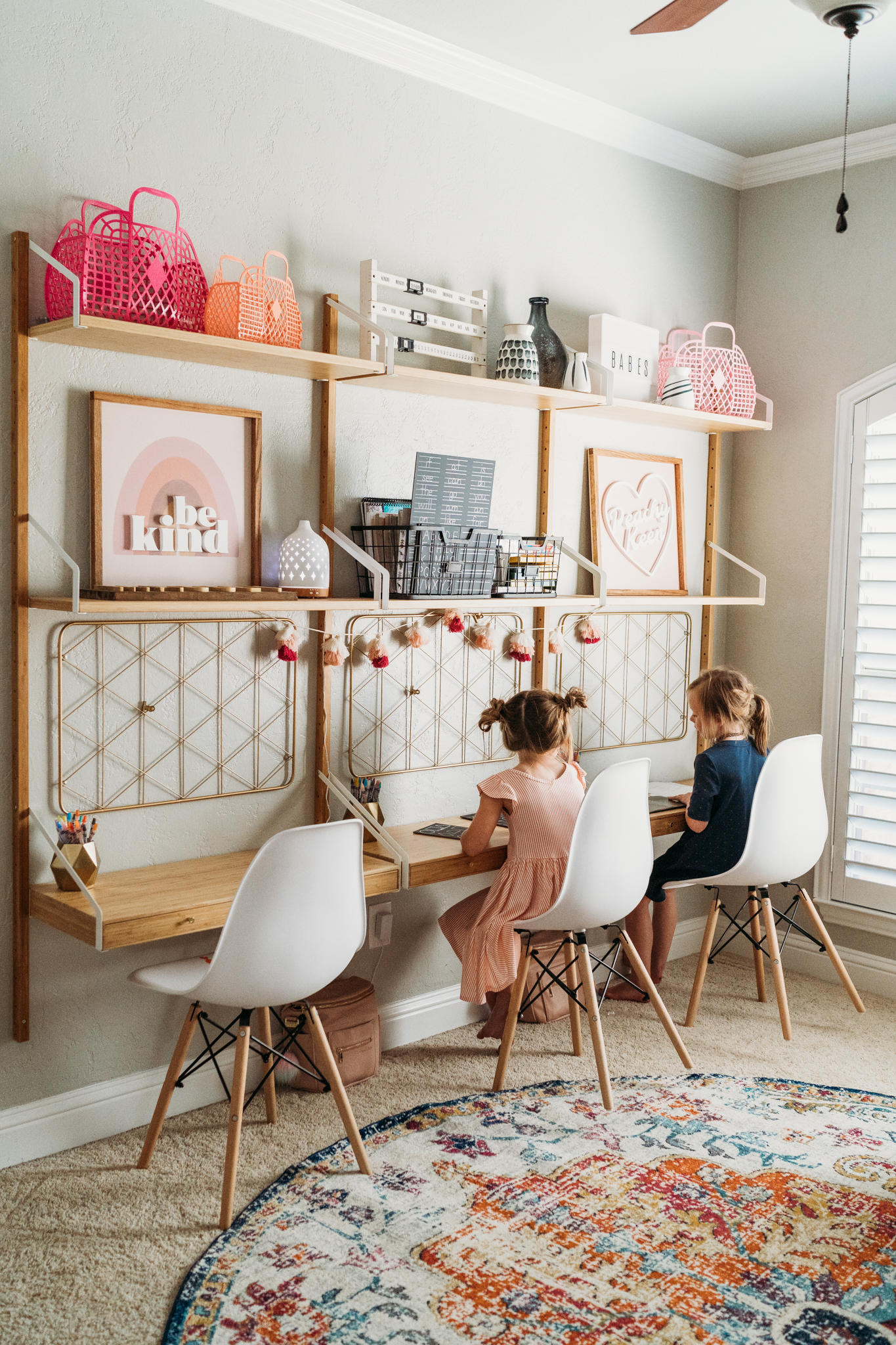
Step 2: Choose Functional Furniture
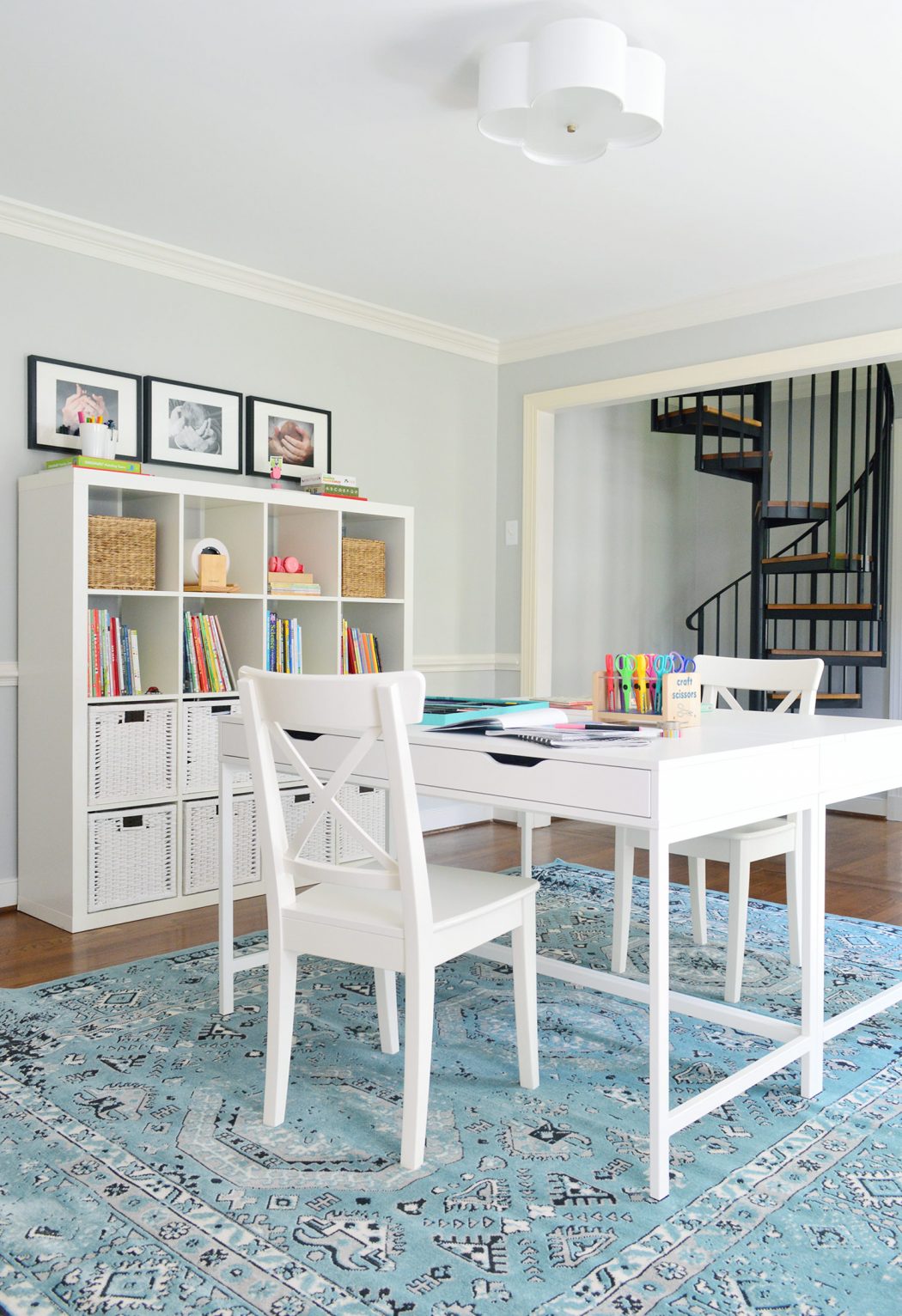
Your homeschool furniture doesn’t have to be fancy—just functional.
Must-have basics:
- A solid table or desk
- Comfortable chairs (adjustable if possible)
- A bookshelf or cubby system for storage
Optional additions:
- Bean bags or floor cushions for reading
- A whiteboard or chalkboard
- A fun bookshelf that’s accessible to your kids with books designed to just be enjoyed
- A sensory space (think blankets or a cozy rug)
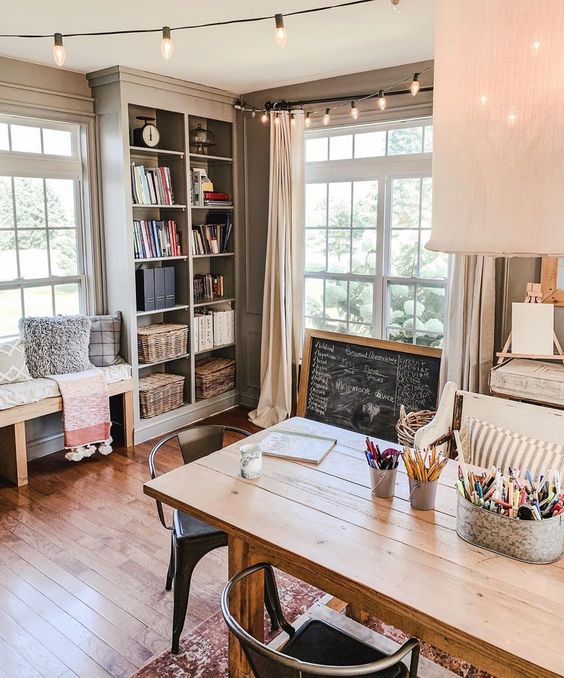
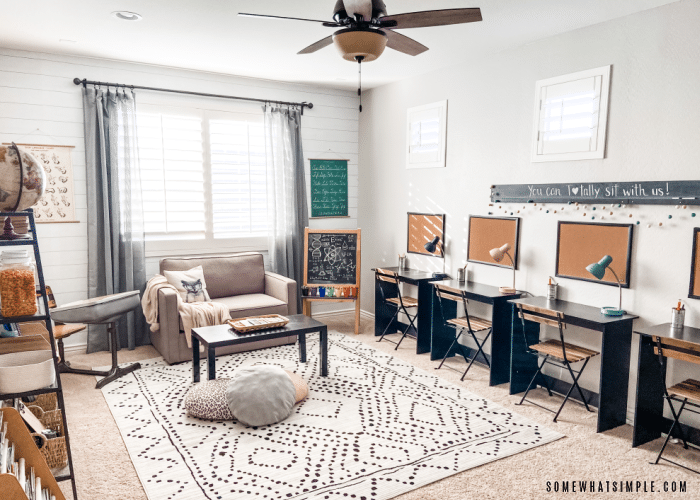

Step 3: Organize Materials by Subject or Child
Organization is key to a smooth homeschool day. Try:
- Color-coded bins or folders for each subject or child
- Rolling carts for mobile organization
- Magazine holders or file folders for easy-to-grab workbooks
Another really helpful tip from Treehouse Schoolhouse is to
Organize your homeschool materials based on how often you use them. (link here to post)
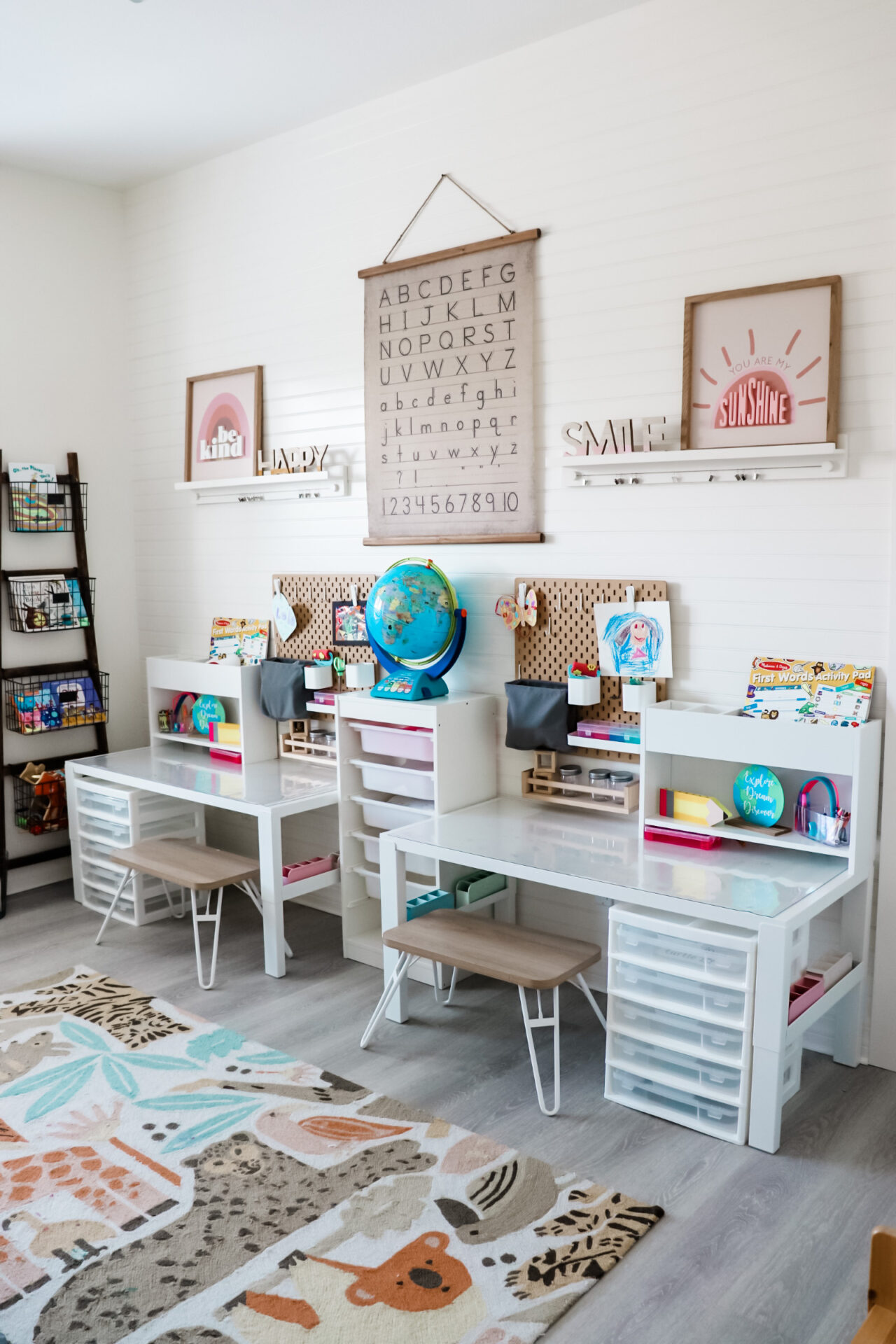
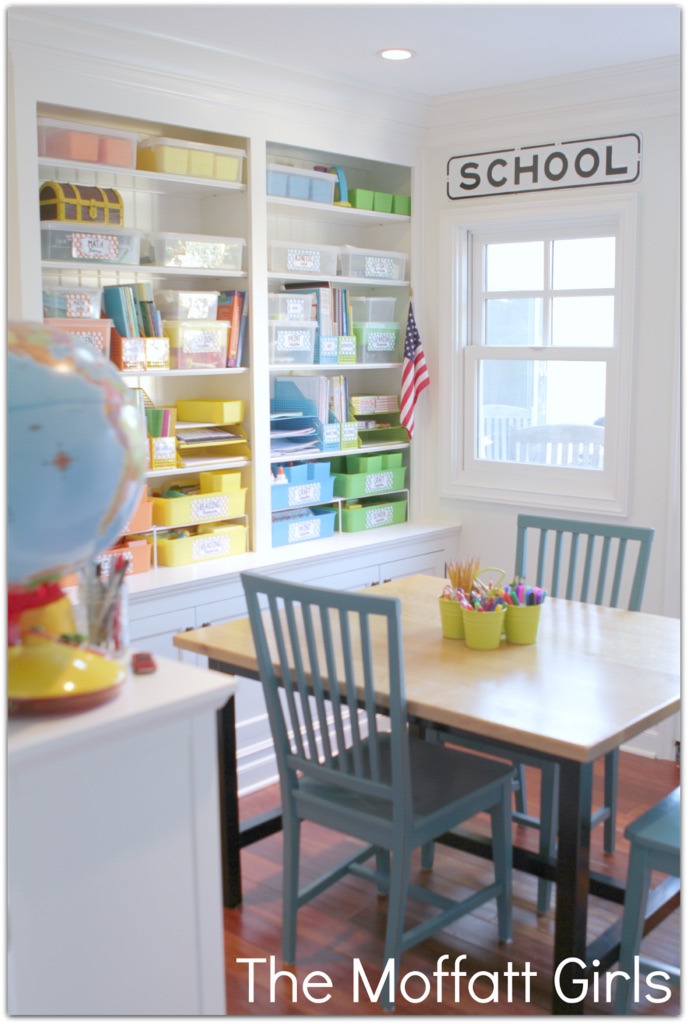
Everything should have a place so your kids know where to find and return things, and there’s no point in having things you only use three times a year in the “easy to reach” places. Have spaces designated for things you use often and things you use rarely. I would say here, too, that it’s important not to underestimate something as simple as a rolling car to help keep things organized. I love how Rebecca styled hers over at A Humble Place:

Step 4: Create a Daily Rhythm Area
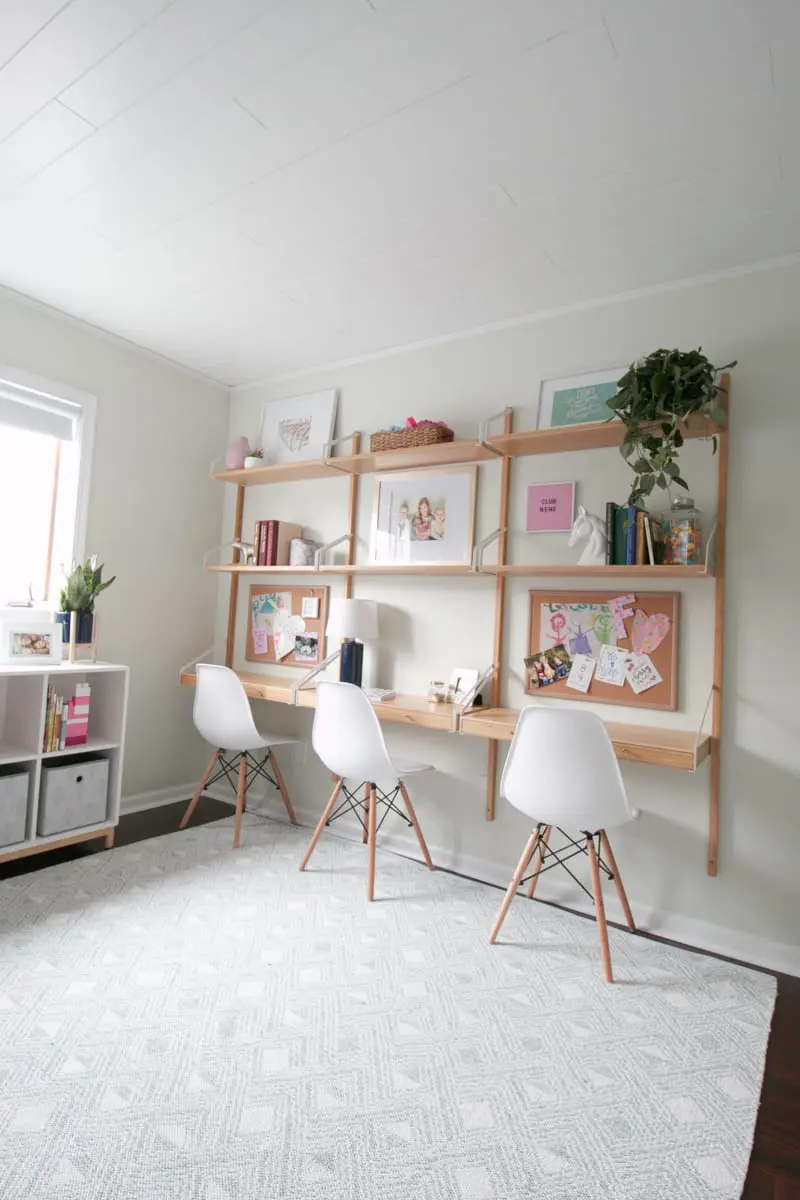
Designate a space in your room for visual daily plans. Ideas include:
- A large calendar or visual schedule chart
- A morning board with memory verses, weather, or the letter of the week
- A spot to display the week’s goals or assignments
This helps children anticipate the flow of the day and gives structure to your routine.


Step 5: Include a Reading Nook
This doesn’t need to be fancy nor is it actually completely necessary! That said, it can be really beneficial to the culture of your homeschool to have a spot that is both welcoming and conducive to reading solo or even as a family. Create a soft, inviting space where your child can curl up with a good book. Include:
- A small shelf of rotating books
- Floor cushions or a soft chair
- A small lamp or fairy lights for cozy lighting
Even the smallest reading corner can become a magical part of your homeschool day.
Step 6: Leave Room for Creativity
Homeschooling is not just about math worksheets. Leave room for:
- Art supplies (crayons, scissors, glue sticks, paint)
- Hands-on activities like puzzles, manipulatives, and games
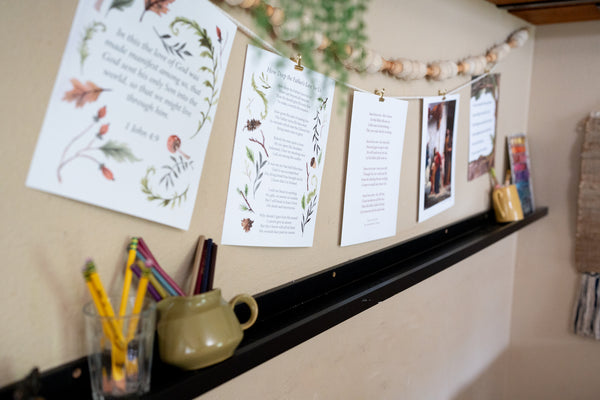
- Display space for your child’s creations (cork board, fridge clips, or frames). I came across this super cute example of a wall in a homeschool space over at Treehouse Schoolhouse:
Creating a homeschool space that fosters creativity starts with cultivating an environment that encourages curiosity, exploration, and a sense of wonder. Instead of aiming for perfection, focus on flexibility—choose a space that allows for both structure and spontaneity. As we’ve touched on throughout this blog post, a creativity-friendly homeschool area doesn’t need to be large or fancy; even a corner of the dining room, a nook in the living room, or a spot near a sunny window can become a haven for imaginative learning. Keep the area inviting with warm lighting, calming colors, and touches of your child’s artwork or inspiring quotes. Open shelving or baskets filled with art supplies, building materials, and sensory tools make it easy for children to access what they need and take ownership of their learning. A comfortable rug or bean bag chair invites reading or daydreaming, while a small table with a rotating selection of materials—paints, clay, paper, LEGOs, or nature finds—sparks creative projects without needing elaborate setups. Allow room for mess and imperfection, knowing that some of the best ideas are born in a bit of chaos. I feel like, as a mom, when there are blocked off spaces that are expected to get “messy” temporarily, it’s easier to cope with rather than having open-ended spaces where chaos can quickly get out of hand. With that in mind, create zones within the space: a quiet area for reading and reflecting, a hands-on space for projects, and maybe a wall or bulletin board to showcase work and fuel pride. Music, nature sounds, or even silence can all play a role in nurturing imagination, so consider how sound impacts the atmosphere. Most importantly, be mindful not to over-clutter the space with too many supplies or decorations; sometimes less truly is more when it comes to inspiring original thinking. A creativity-rich homeschool environment reflects your child’s interests, evolves with their growth, and reminds them daily that learning is not just about worksheets and checkboxes—it’s about discovery, joy, and the freedom to grow and develop through their work and play.


Pin it to read or reference later!
Final Thoughts
Your homeschool room doesn’t need to be perfect—it just needs to work for you. Keep it flexible, make it personal, and remember: learning happens in lots of places, not just at a desk.
Your home is already the most important learning environment your child will ever have, find freedom and joy in that as you craft a space that works for you and your family.
What does your homeschool space look like?
Do you have any tips or tricks to share?
Where is your favorite place to go for homeschool room inspiration?
Drop them in the comments—I’d love to hear from you!
Until next time, happy homeschooling!





This was fun to look at. We are in the process of building our school room so this post was helpful. Thank you
Aw! Thank you so much for commenting, Rebekah! I’m glad it was helpful 🙂 There are so many fun ideas to try and experiment with.
Thank you so much for including our space!
Aw, you are very welcome, Di! It’s so pretty 🙂